3 Major Battles in the Prophet's Life: Timeless Lessons Every Muslim Needs (2026)
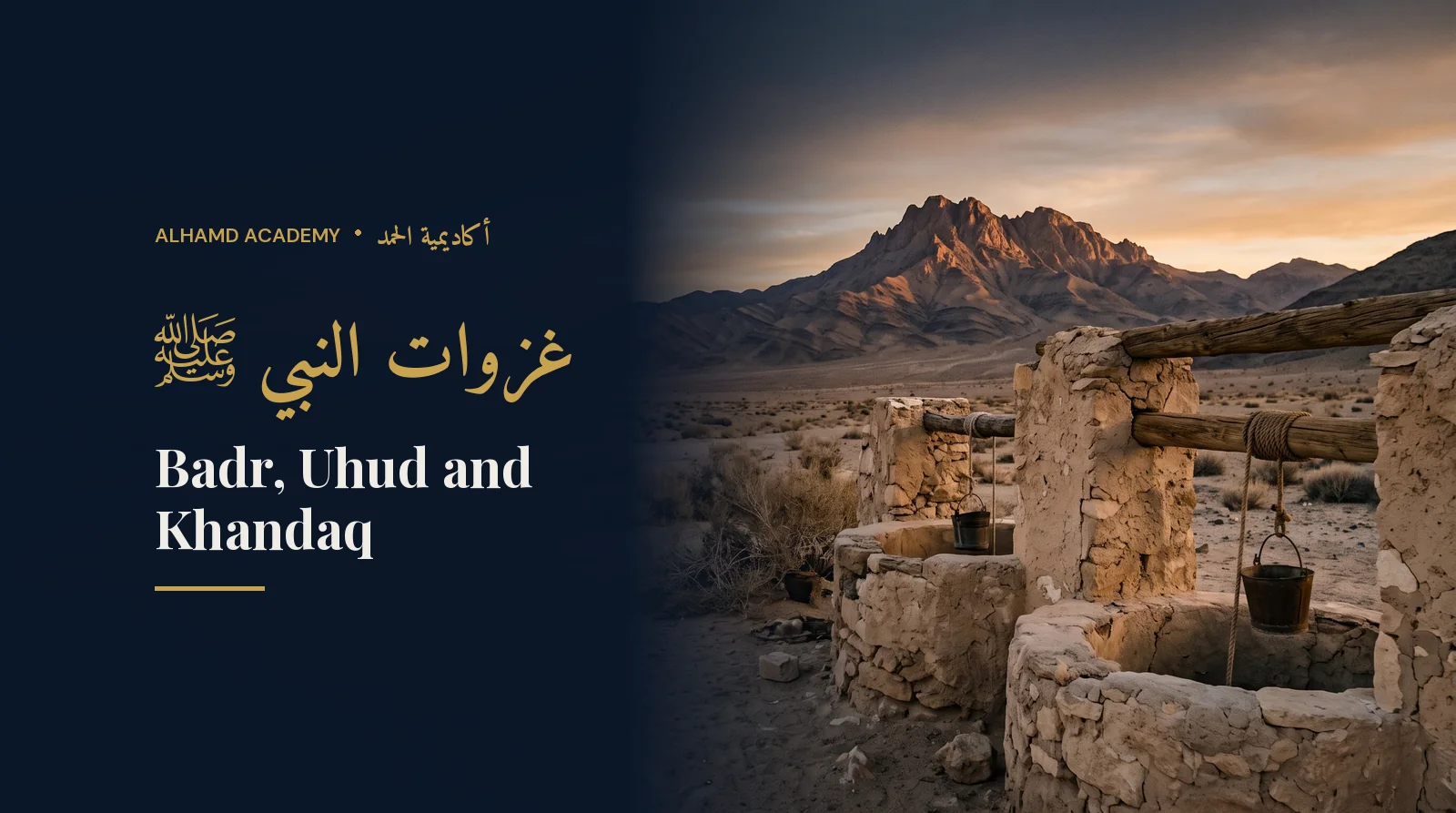
The early history of Islam is characterized by several Major battles in the Prophet ﷺ's life that had a dramatic effect on the Arabian Peninsula's sociopolitical environment and shaped the course of the Muslim community. The Battles of Badr, Uhud, and Khandaq are particularly significant among them. Under the direction of the Prophet Muhammad (PBUH), each conflict had its own set of challenges and outcomes, which helped the early Muslim community grow both strategically and spiritually. The purpose of this comparative research is to investigate the reasons, incidents, results, and ramifications of these three crucial conflicts.

Major Battles in the Prophet's Life ﷺ
Among the most inspirational and revolutionary moments in Islamic history are the Major battles in the Prophet's life ﷺ. They taught us lessons about religion, tenacity, and dependence on Allah, in addition to being times of military conflict.
These conflicts were so important to the Prophet's (peace be upon him) companions that they transmitted them to their offspring in the same way that they taught the surahs of the Quran. This demonstrates that these conflicts were more than just historical occurrences; they were a component of the early Muslims' spiritual training.
The significance of Prophet Muhammad's battles, how the companions preserved their legacy, and the potent influence they may have on bolstering Muslims' faith today will all be discussed in this article.
The Badr Battle (2 AH/624 CE)
Major battles in the Prophet's life ﷺ and the first significant military conflict. Near the Badr wells, a Quraysh army of over 1,000 fully armed fighters confronted a Muslim force of 313 men with light weapons.
The Muslims prevailed handily. According to Surah Al-Anfal 8:41, the Quran refers to Badr as "the day of the criterion"—the day Allah separated truth from deception.
The lesson for British Muslims is that results are determined by sincerity and divine backing rather than by numbers and equipment. Any British Muslim who feels outnumbered at work, school, or in society at large will find solace in this.
The Uhud Battle (3 AH/625 CE)
The next year, from another one of the major battles in the Prophet's life ﷺ, Quraysh came with 3,000 soldiers to exact retribution on a group of 700 Muslims. At first, the Muslims were gaining, but despite the express orders of the Prophet, a squad of archers left their post to gather loot.
The Muslims suffered significant losses when the Quraysh cavalry seized the advantage of the opening, including Hamza ibn Abdul-Muttalib (RA), the Prophet's uncle and one of his closest associates.
Through Uhud, Allah imparted the lesson that discipline is more important than zeal. In immediate reaction, Surah Aal-Imran 3:152–155 was revealed. The lesson for British Muslims is that every community has its ups and downs. The institutional discipline that keeps the mistakes from turning into losses is what counts.
Major battles in the Prophet's life ﷺ: The Trench and the Battle of Khandaq (5 AH/627 CE)
Together with several other tribes, Quraysh assembled a 10,000-strong army to besiege Madinah and eradicate the Muslims. Salman al-Farsi (RA), a Persian companion, proposed creating a defensive trench around Madinah's vulnerable areas. After a protracted siege, the coalition disintegrated, the trench held, and the Muslims triumphed.
The lesson for British Muslims is that, when applied within Islamic principles, practical insight from any culture or background is accepted. Despite being Persian rather than Arab, Salman's recommendation kept the city intact.
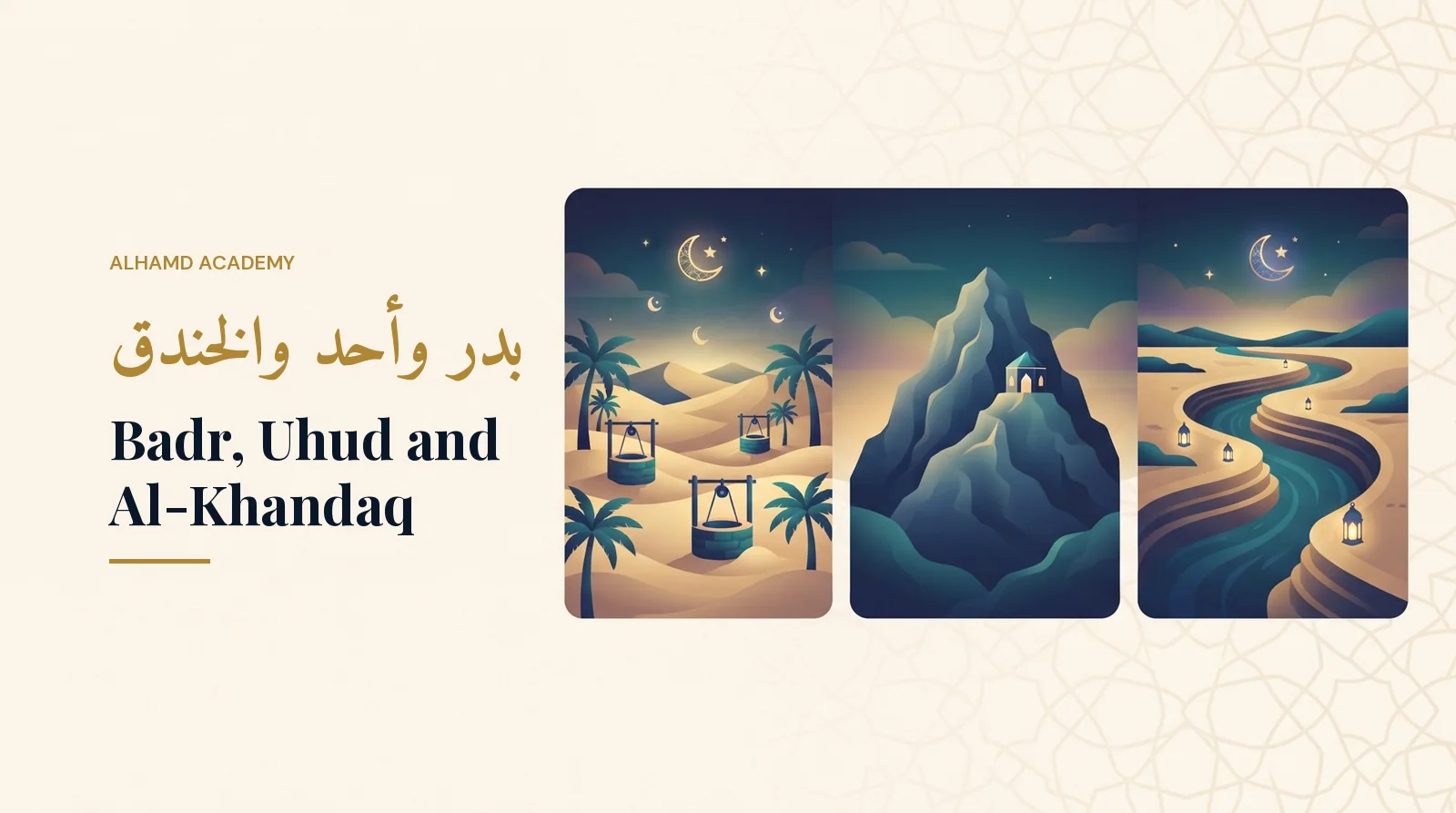
The varied experience of converts, second-generation professionals, and immigrants from all over the world is beneficial to British Muslim institutions.
Comparative Evaluation
Military Strategy of Major Battles in the Prophet's Life ﷺ:
Various facets of military strategy and leadership were demonstrated at the Battles of Badr, Uhud, and Khandaq. Badr emphasized the value of morale and strategic position, with the Muslims taking advantage of their familiarity with the area.
Uhud emphasized the necessity of discipline and the perils of disobedience because one mistake resulted in an almost catastrophic loss. Khandaq, on the other hand, was a prime example of the significance of military strategy innovation and the efficacy of defensive warfare.
Leadership and Decision-Making:
Throughout all three conflicts, the Prophet Muhammad (PBUH) consistently demonstrated leadership. The results of these conflicts depended heavily on his capacity to motivate his supporters, make calculated choices, and adjust to shifting conditions. His leadership inspired a tiny, ill-prepared force to victory at Badr.
He kept control and avoided a total thrashing at Uhud despite the loss. His choice to use an unusual defensive tactic at Khandaq showed his capacity for creativity and adaptation.
Effect on the Muslim Community:
These major battles in the Prophet's life ﷺ had a significant effect on the Muslim community. The Muslims' position was strengthened, and their faith in their cause was bolstered by the victory at Badr.
The defeat at Uhud reminded them of the difficulties they encountered and the necessity of discipline and unity. After Khandaq successfully defended itself against overwhelming odds, the balance of power shifted in favor of the Muslims, marking a turning point.
Conclusion about the Major battles in the Prophet's life ﷺ
The Major battles in the Prophet's life ﷺ, Badr, Uhud, and Khandaq, demonstrate the Prophet Muhammad's (PBUH) military leadership, which was a unique blend of strategic genius, creative thinking, and unshakeable ethical discipline.
He showed tactical brilliance and a compassionate attitude to winning at Badr. He taught a fundamental lesson at Uhud about the significance of discipline and submission to authority.
He demonstrated his ability to use psychological warfare and strategic innovation in Khandaq when he used intelligence and patience to defeat a stronger army.
But what really distinguishes his military tactics is the moral foundation that guided each choice.
By establishing a code of conduct that safeguarded civilians, prohibited needless devastation, and treated captives with dignity, he turned the cruel and chaotic battle of the Arabian Peninsula into a morally directed activity.
His pursuit of diplomatic solutions, even in situations where a military alternative was available, is a great illustration of his ultimate purpose, which was never victory for its own sake but rather the building of justice and peace.
Read More:
Essential Islamic Knowledge Every Muslim Should Know 2026
How to Perform Salah and Wudu: Step-by-Step Guide for New Muslims 2026