The Qur'an and Science | Alhamd Academy

The Qur'an and Science invite Muslims to reflect on revelation, creation, and the natural world. The Qur'an encourages observation and learning, while science studies natural processes through evidence. Exploring this relationship responsibly means honoring Islamic revelation and the scientific method without confusing their distinct purposes in practice.
The Qur'an and Science can deepen appreciation for the universe's order and complexity, yet Quranic verses shouldn’t be forced into modern theories. A balanced Islamic approach values knowledge, context, and humility, recognizing that the Qur'an guides worship, morality, and reflection on Allah's creation for believers.
Qur'an: Scientific Statements Far Beyond Its Time
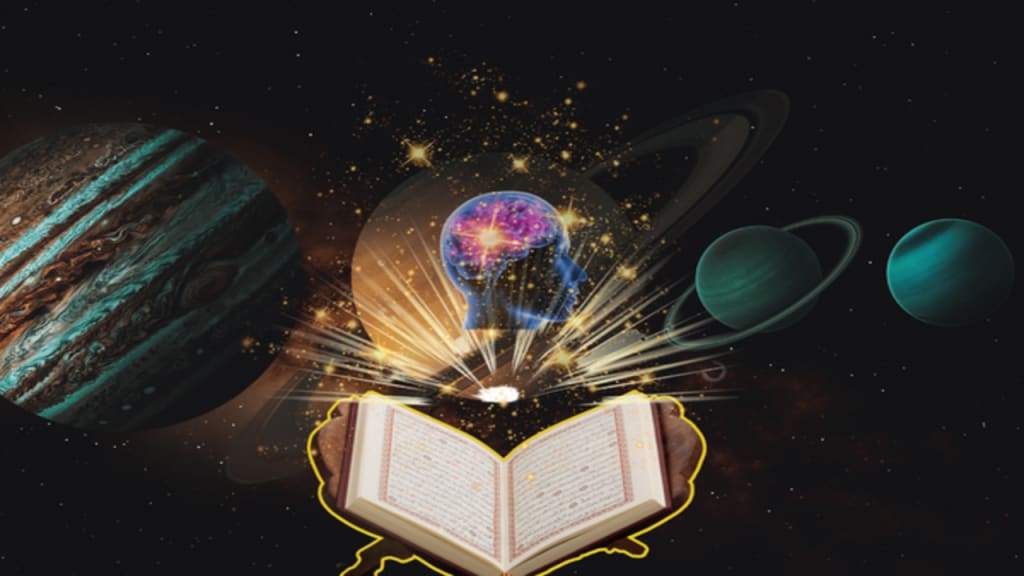
Many discussions about the Qur'an and Science focus on verses describing creation, the universe, human development, and natural phenomena. Muslims often find these descriptions striking because they appeared centuries before modern instruments and systematic research. Such passages invite reflection on revelation's language, context, and enduring relevance for believers today.
Some Quranic passages describe natural phenomena in language that encourages thought rather than technical measurement. Their significance should be considered through Arabic wording, historical context, and recognized interpretation. This prevents readers from treating every description as a modern prediction while still appreciating the text's contemplative power carefully and honestly.
Religion and science
Religion and science investigate important questions, but they often use different methods. Science studies natural processes through observation, testing, evidence, and revision. Religion addresses meaning, purpose, morality, worship, responsibility, and humanity's relationship with the Creator. Both can guide understanding when each remains faithful to its own purpose and limits.
For Muslims studying the Qur'an and Science, genuine scientific discovery doesn’t conflict with belief in Allah. The Qur'an encourages reflection on the heavens, earth, life, and creation. Scientific investigation can explain natural processes, while faith also considers why existence has meaning and whether creation points beyond itself toward wisdom and mercy.
Scientific Advancements Strengthen Case for a Creator
Scientific advancements have revealed extraordinary complexity and order throughout the universe. From physical laws to biological systems, discoveries continue expanding human understanding of how nature operates. In the Qur'an and Science, these findings encourage many people to consider deeper questions about origins, natural laws, consciousness, and the conditions supporting life itself.
For many believers, such discoveries strengthen reflection on the possibility of a Creator. This doesn’t mean every scientific finding automatically proves a specific religious claim. Instead, scientific knowledge can encourage questions about why the universe exists and why its systems display remarkable order to us all as humans.
Reflection on Creation and Revelation
The Qur'an repeatedly directs human attention toward the natural world. The heavens, earth, animals, plants, and human life are presented as signs inviting reflection. This emphasis encourages Muslims to develop curiosity and seek knowledge rather than viewing observation and learning as opposed to faith itself.
The Qur'an isn’t presented as a modern scientific textbook containing technical explanations of every natural process. Its primary purpose is guidance, worship, moral instruction, and directing humanity toward awareness of Allah. Scientific study can complement reflection on creation without replacing revelation or transforming religious verses into laboratory formulas.
Qur'an's Scientific Accuracy Fact-Checked
Claims about the Qur'an and Science should be examined carefully rather than accepted simply because a modern scientific idea appears similar to a translated verse. Readers should examine original wording, historical context, classical interpretations, and reliable evidence before accepting proposed connections between text and theory.
Fact-checking should begin with the Arabic wording and its possible meanings. Translations may simplify or narrow expressions, making a verse appear more technically specific than the original language requires. Scientific theories may also develop as researchers gather new evidence and refine explanations over time in practice and debate worldwide.
Qur'an's Scientific Accuracy: Not Just a Coincidence

Many Muslims believe certain Quranic descriptions are remarkable enough to encourage serious reflection rather than being dismissed as coincidence. When exploring the Qur'an and Science, they point to passages concerning natural phenomena and human development as examples that invite deeper consideration of revelation, meaning, human responsibility, and divine wisdom.
The strength of each argument depends on interpretation. A responsible discussion should ask whether the wording clearly describes a specific phenomenon, whether the interpretation existed before modern discoveries, and whether other possible meanings should also be considered with humility and careful evidence rather than certainty alone in every case.
Authenticity of Qur'an
The authenticity of the Qur'an is central to Islamic belief. Muslims believe it is the revealed word of Allah, preserved through memorization and written transmission. These connected methods have played an important role in maintaining the Quranic text and teaching it across generations faithfully for centuries around the world.
The Qur'an was transmitted within communities of reciters, teachers, and students. Memorization provided an oral method of preservation, while written materials recorded the revelation. Together, these methods created a strong educational tradition based on reading, listening, recitation, repetition, and correction for careful learners in every generation across the world.
Qur'an's Authenticity Cross-Checked by Memorized and Written Texts
The Qur'an has been transmitted through both memorization and written texts. Muslims learned verses by recitation while written materials provided references for teaching, review, comparison, and preservation across generations. This combination created a connected system of oral and written transmission central to Quran education for Muslims everywhere today still.
Memorization remains especially significant because millions of Muslims continue learning and reciting the complete Qur'an worldwide. Teachers correct students through listening and repetition, while written copies support reading and revision. Together, these methods strengthen the connection between spoken recitation and the written Quranic text for believers and students alike.
Qur'an's Authenticity Preserved by Immediate Transcription and Official Distribution
Islamic tradition describes the early recording and later standardization of the Quranic text during the caliphate of Uthman ibn Affan. Early preservation combined recitation, written materials, teaching, and community transmission, while Qur'an and science discussions continue examining manuscripts and transmission history alongside traditional Islamic accounts.
FAQ
Does the Qur'an conflict with modern science?
No. Islam encourages studying creation, while science investigates natural processes. Muslims can value scientific research while believing Allah created everything.
How should Muslims approach the Qur'an and science?
Muslims should study both carefully, considering Quranic language, context, evidence, and interpretations, while avoiding exaggeration, speculation, and forced connections.
Why is the Qur'an considered authentic?
Muslims believe the Qur'an was preserved through memorization, writing, teaching, and recitation, forming a continuous tradition across generations faithfully today.
The relationship between Qur'an and science invites thoughtful reflection on faith, evidence, and purpose. Muslims can appreciate scientific inquiry while trusting the Qur'an's guidance, preservation, and spiritual wisdom, seeking balanced understanding that strengthens belief and deepens appreciation of creation itself.