Tajweed Rules Every Muslim Should Know — Essential Guide

Every Muslim who recites the Quran in Salah encounters Tajweed rules whether they realize it or not. Some apply them correctly from years of guided practice; others recite without ever learning the rules formally, unaware that small pronunciation mistakes can alter the meaning of Allah's words. This guide covers the essential Tajweed rules every Muslim should know.
Alhamd Academy teaches these rules through live, one-on-one sessions with certified Al-Azhar instructors, ensuring every student applies them correctly rather than just memorizing definitions.
Why Tajweed Rules Are an Obligation, Not an Option
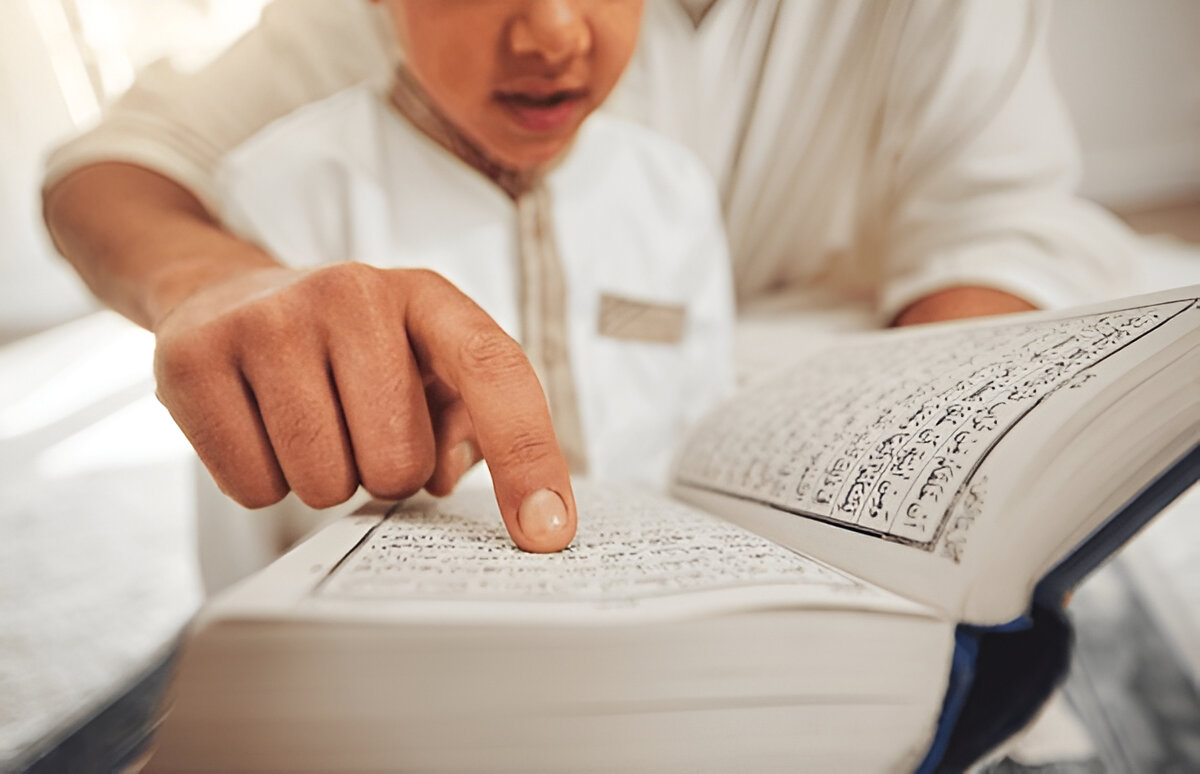
Allah commands in the Quran: "…and recite the Quran with measured recitation (Tarteel)" (Surah Al-Muzzammil, 73:4). Scholars point to this verse and the Prophet's ﷺ own recitation as the basis for treating correct Tajweed as an individual obligation (Fard al-Ayn) on every Muslim who recites the Quran in prayer.
The stakes are real: changing a single letter's pronunciation can shift a word's entire meaning. The classic example is قَلْب (qalb, "heart") becoming كَلْب (kalb, "dog") through a slight change in tongue placement — a mistake Tajweed exists to prevent.
1. Makharij al-Huruf — Articulation Points
Before any rule can be applied, a reciter must know exactly where in the mouth or throat each of the 29 Arabic letters is produced. Letters like ح and خ, or ذ and ز, sound deceptively similar to untrained ears but come from entirely different articulation points. Mastering Makharij is the true foundation of Tajweed.
2. Sifaat al-Huruf — Letter Characteristics
Beyond where a letter is produced, each letter carries specific characteristics — such as whether it's whispered or voiced, heavy or light, or produces an echo. Understanding these traits helps a reciter distinguish letters that share an articulation point but sound different.
3. Noon Sakinah and Tanween Rules
These four rules — Izhar, Idgham, Iqlab, and Ikhfa — govern how the "n" sound of Noon Sakinah or Tanween changes depending on the following letter. They appear on nearly every page of the Mushaf, making them essential for daily recitation.
4. Meem Sakinah Rules
Similarly, a silent Meem (مْ) follows three rules — Ikhfa Shafawi, Idgham Shafawi, and Izhar Shafawi — depending on whether it's followed by ب, another م, or any other letter.
5. Madd (Elongation) Rules
Madd rules determine how long to stretch vowel sounds, ranging from two counts for natural Madd (Madd Tabee'i) up to six counts for the strongest form, Madd Lazim. Inconsistent Madd length is one of the most common recitation mistakes among self-taught readers.
6. Qalqalah — The Echoing Letters
Five letters — gathered in the phrase "قُطْبُ جَدٍ" (ق ط ب ج د) — produce a slight bouncing echo when they carry a Sukoon, especially at the end of a verse. Applying too much or too little bounce is a common beginner error.
7. Tafkheem and Tarqeeq — Heavy and Light Letters
Some letters, like ق ص ض غ ط ظ, are always pronounced with a fuller, "heavier" sound, while most others remain light. A few letters, like ر and ل, shift between heavy and light depending on their surrounding vowels — a nuance that takes practice to master.
How to Learn and Retain These Rules
Learn one rule at a time and apply it immediately in actual recitation rather than memorizing definitions in isolation.
Practice with a color-coded Tajweed Mushaf, which visually marks Madd, Ghunnah, and Qalqalah letters.
Record your recitation and compare it against a certified reciter like Sheikh Al-Husary or Mishary Alafasy.
Get consistent, live correction from a qualified teacher — most Tajweed mistakes are ones a reader cannot hear in their own voice.
Master Every Tajweed Rule with Certified Guidance
Knowing the rules in theory is only half the journey — applying them correctly requires a teacher who can hear your recitation and correct it in real time. Alhamd Academy's Tajweed courses guide students step by step from Makharij to fluent, confident recitation.
FAQs
What is the most important Tajweed rule to learn first?
Makharij al-Huruf (correct articulation points) should always come first, since every other Tajweed rule depends on pronouncing letters accurately.
Is it sinful to recite without Tajweed?
Recitation without Tajweed remains valid and rewarded, but scholars encourage every Muslim to learn and apply basic Tajweed rules as a matter of religious responsibility and respect for the Quran.
How long does it take to master all Tajweed rules?
Most students grasp the essential rules within six months to a year of consistent practice with a qualified teacher, while refining recitation continues throughout a lifetime.
Every Muslim benefits from learning these essential Tajweed rules, not as an academic exercise, but as a practical path toward reciting the Quran the way it was revealed — with precision, reverence, and beauty.