Stories of the Prophets in the Quran: Complete Guide for Families 2026

Why should educating your children about stories of the prophets in the Quran be your top priority when there are so many other things you want to teach them? With so many subjects you want to teach your kids, it can be challenging to decide which to focus on. Here are reasons why you must teach your children about the prophets of Islam.
Stories of the Prophets in the Quran
Lessons from stories of the prophets in the Quran are the best representations of the human experience, with all of its hardships, victories, and pivotal moments. These stories, which are clearly described in the Quran, are more than just historical anecdotes; they serve as the cornerstone of Islamic morality and religion.
As a result, understanding them provides believers with a useful, long-lasting guide for navigating life's challenges.
The Quran elevates these holy biographies and becomes a continual source of spiritual nourishment and inspiration. As a result, we must treat these narratives as clear, divine guidelines for success in this life as well as the next.
Advantages of Stories of the Prophets in the Quran
The reader is confronted with tales of societies and countries that existed thousands of years ago as they navigate the Qur'an. The wisdom of recounting events that occurred so long ago and appear to have little bearing on our current life may be questioned by some.
Indeed, the Qur'an contains several references to "stories." But we have to acknowledge that they are all based on actual events that have happened throughout the world's history and impacted a great number of people.
The scholars of the Qur'an have gone to considerable pains to examine every one of the stories, and they have listed some advantages that these "stories" offer, such as the following:
Establishing Morals and Values
Stories from the Quran teach people morals, values, and qualities. For instance, the tale of Prophet Yusuf (peace be upon him) promotes chastity and self-control by highlighting perseverance and fortitude in the face of temptation.
He demonstrated that one's heart and spirit can stay pure in the face of adversity by choosing incarceration rather than sacrificing his moral integrity.
The narrative of Prophet Musa (peace be upon him) and Sayyiduna Khidr emphasizes the value of humility in the pursuit of knowledge as well as the necessity of patience and slow learning.
Stories of the Prophets in the Quran mean Increasing Belief and Confidence in Allah
The Quran's stories support faith in Allah by promoting confidence, optimism, and genuine dependence on Him. These stories highlight the difficulties faced by the prophets and the help they received from God.
For example, when Prophet Ibrahim (peace be upon him) abandoned his wife Hajar and their baby Isma'il in the desert, she said, "Then He will not abandon us," when she realized it was Allah's will. [Musannaf, 'Abd al-Razzaq]
Similar to this, Allah depicts Musa's unwavering faith in the tale of the Children of Israel and Musa at the Red Sea, while Pharaoh and his army were pursuing them.
Unwavering faith in Allah is also demonstrated by the migration narrative of the Prophet Muhammad (Allah bless him and grant him peace). The Prophet responded to Abu Bakr's (Allah be pleased) concern that their adversaries may discover them in the cave by saying,
"Given that Allah is their third, what do you think of two?"
An All-Inclusive Framework for Education
In accordance with Quranic principles, the stories in the Quran offer a comprehensive, well-coordinated approach to raising people. The Quran fosters a well-rounded ethical and educational upbringing by addressing all aspects of moral, social, and spiritual growth via its stories.
List of Every Prophet Mentioned in the Qur'an: Prophet Adam's Story
Stories of the Prophets in the Quran by arrangement:
The narrative of Prophet Adam, the first man. There are a lot of things we can learn from his life.
The Prophet Idris's Story:
After Adam, the second prophet in Islam was Prophet Idris (Enoch).
The Prophet Nuh's Story:
The narrative of Prophet Nuh (Noah) is about unbelievers.
The Prophet Hud's Story:
One of the ancient tribes of Ad was to be guided along the right road by Prophet Hud.
The Prophet Saleh's Story:
Respected and intelligent, Prophet Saleh was sent to assist lead the people of Thamud.
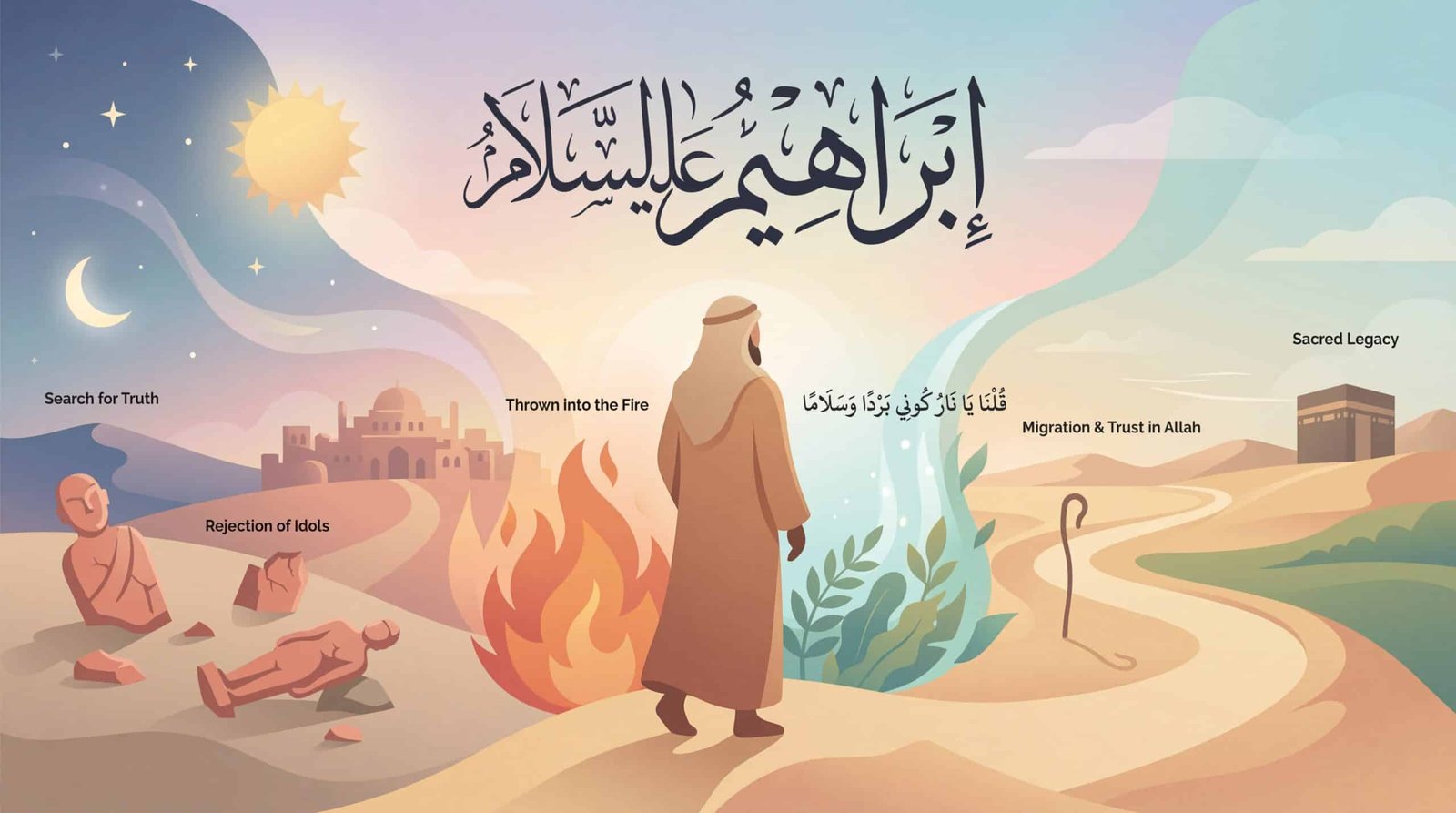
Prophet Ibrahim:
The most inspirational aspect of Prophet Ibrahim's biography is how he lived a lonely existence for a long time without losing his faith.
The Prophet Lut's Story:
Sodom's population was prosperous.
The Prophet Ishmael's Story:
The narrative of Prophet Ishmael, son of Prophet Ibrahim (AS), and his spouse Hagar.
The Prophet Ishaq's Story:
Prophet Ishmael was the half-brother of Prophet Ishaq, who was the second son of Prophet Ibrahim.
The Prophet Yaqub's Story:
We may learn how a believer should react in difficult circumstances from the account of Prophet Yaqub.
The Prophet Yusuf's Story:
Joseph, the Prophet Yusuf, dreamed that he was destined for greatness.
The Prophet Ayyub's Story:
Prophet Ayyub's (Job's) tale is one of hardship in which his faith is continually put to the test.
The Prophet Shu'aib's Story:
According to Judeo-Christian tradition, Prophet Shu'aib was thought to be Jethro.
The Prophet Musa's Story:
The narrative of the most often cited Prophet in the Qur'an, Musa.
The Prophet Harun's Story:
The narrative of the prophet Harun. In order to rescue the children of Israel, he worked alongside his brother, the Prophet Musa.
The Prophet Dhul-Kifl's Story:
The life of the lesser-known prophet Dhul-Kifl is rather enigmatic.
The Prophet Dawud's Story:
One of Allah's most prominent prophets was Prophet Dawud, who was known by the name of Dawud.
The Prophet Sulaiman's Story:
The third king of the Israelites was Prophet Sulaiman (Solomon), the youngest son of Dawud (David).
The Prophet Dhul-Kifl's Story: The life of the lesser-known prophet Dhul-Kifl is rather enigmatic.
The Prophet Dawud's Story:
One of Allah's most prominent prophets was Prophet Dawud, who was known by the name of Dawud.
The Prophet Sulaiman's Story:
The third king of the Israelites was Prophet Sulaiman (Solomon), the youngest son of Dawud (David).
The Prophet Zakariyah's Story:
He was one among the prophets sent to walk on the holy ground of Jerusalem, leading the Children of Israel along Allah's path.
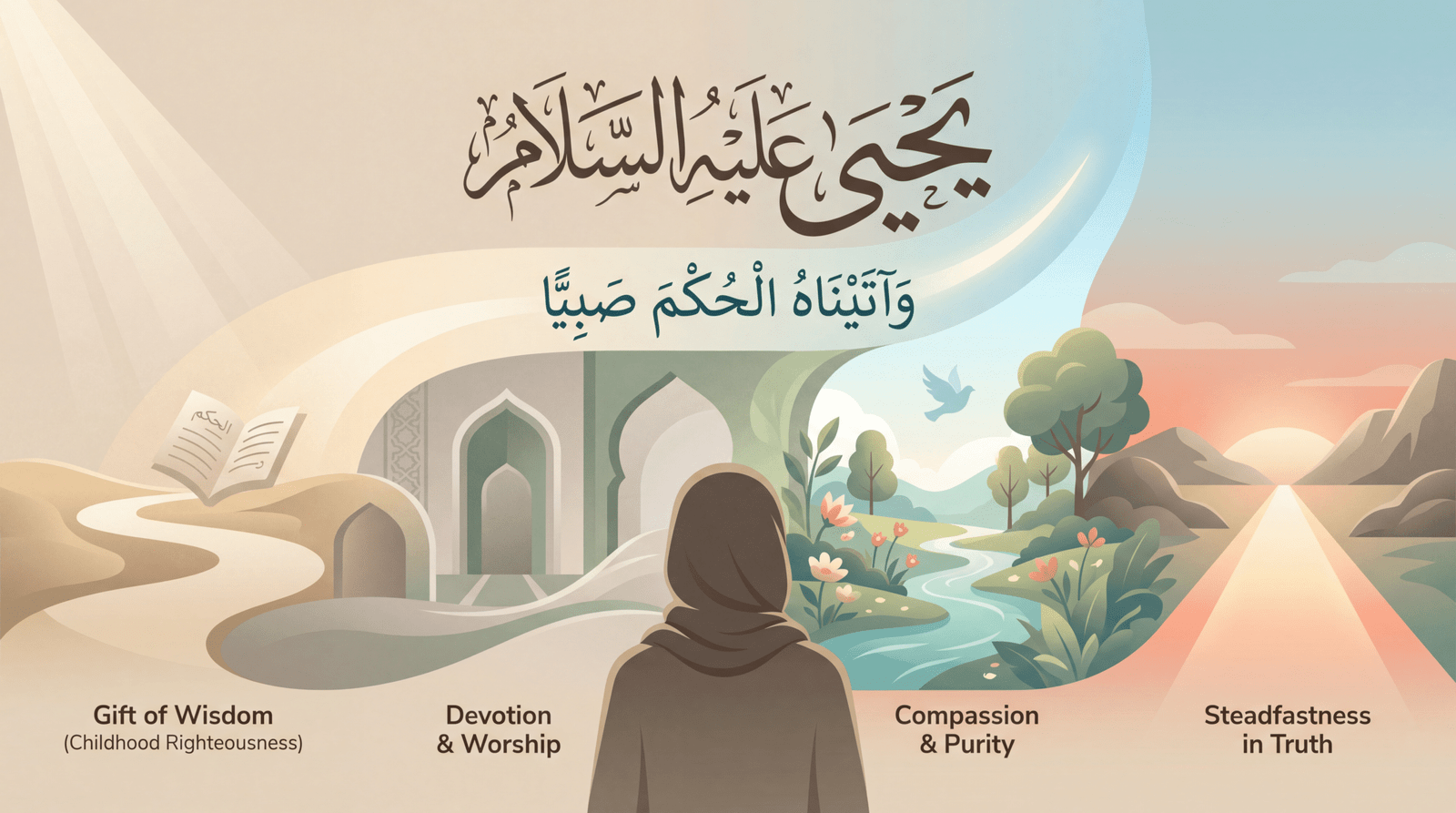
The Prophet Yahya's Story:
Prophet Zakariya is the father of Prophet Yahya. Prophet Yahya was unique from an early age.
The Prophet Isa's Story:
The final recognized messenger before Prophet Muhammad (ﷺ) was Prophet Isa.
Prophet Muhammad (ﷺ):
The seal of the prophets is the story of Prophet Muhammad (ﷺ).
Conclusion: Applying the Stories of the Prophets in the Quran
The stories included in The Lessons From Prophets are genuinely the light that leads us on our own difficult paths.
Every prophet's life demonstrates a distinct aspect of faith:
Nuh's tenacity, Ibrahim's submission, Yusuf's purity, Musa's bravery, and Ayyub's tenacity. All of these qualities were combined by the Prophet Muhammad (PBUH) to create the ultimate, comprehensive human model.
Read More:
Essential Islamic Knowledge Every Muslim Should Know 2026
How to Perform Salah and Wudu: Step-by-Step Guide for New Muslims 2026
3 Major Battles in the Prophet's Life: Timeless Lessons Every Muslim